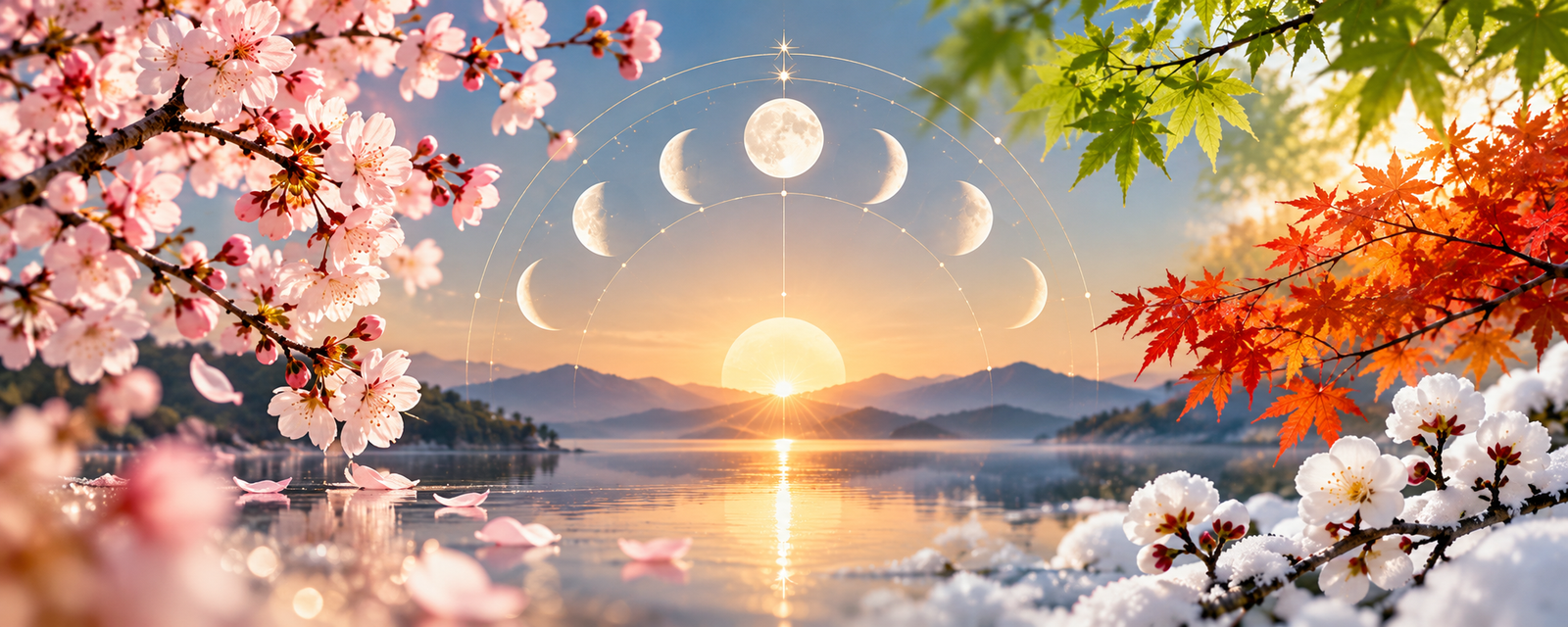
When the First Frost Meets Scorpio Season
On October 23, 2026, two calendars turn the same page. In Japan, the season of Frost Descends — Sōkō (霜降) — begins. In Western astrology, the Sun enters Scorpio.
This timing is built into both systems. Each one marks the moment the Sun reaches 210° of ecliptic longitude, measured from the spring equinox — the same starting point used by the tropical zodiac of Western astrology. Symbolically, both tell a similar story: the bright, social energy of early autumn is ending, and something quieter and deeper is taking its place.
If you’re new to Japan’s seasonal calendar, start with our guide to the 24 solar terms and Western astrology. This post zooms in on one of its most beautiful turning points.
What Sōkō Means and When It Falls in 2026
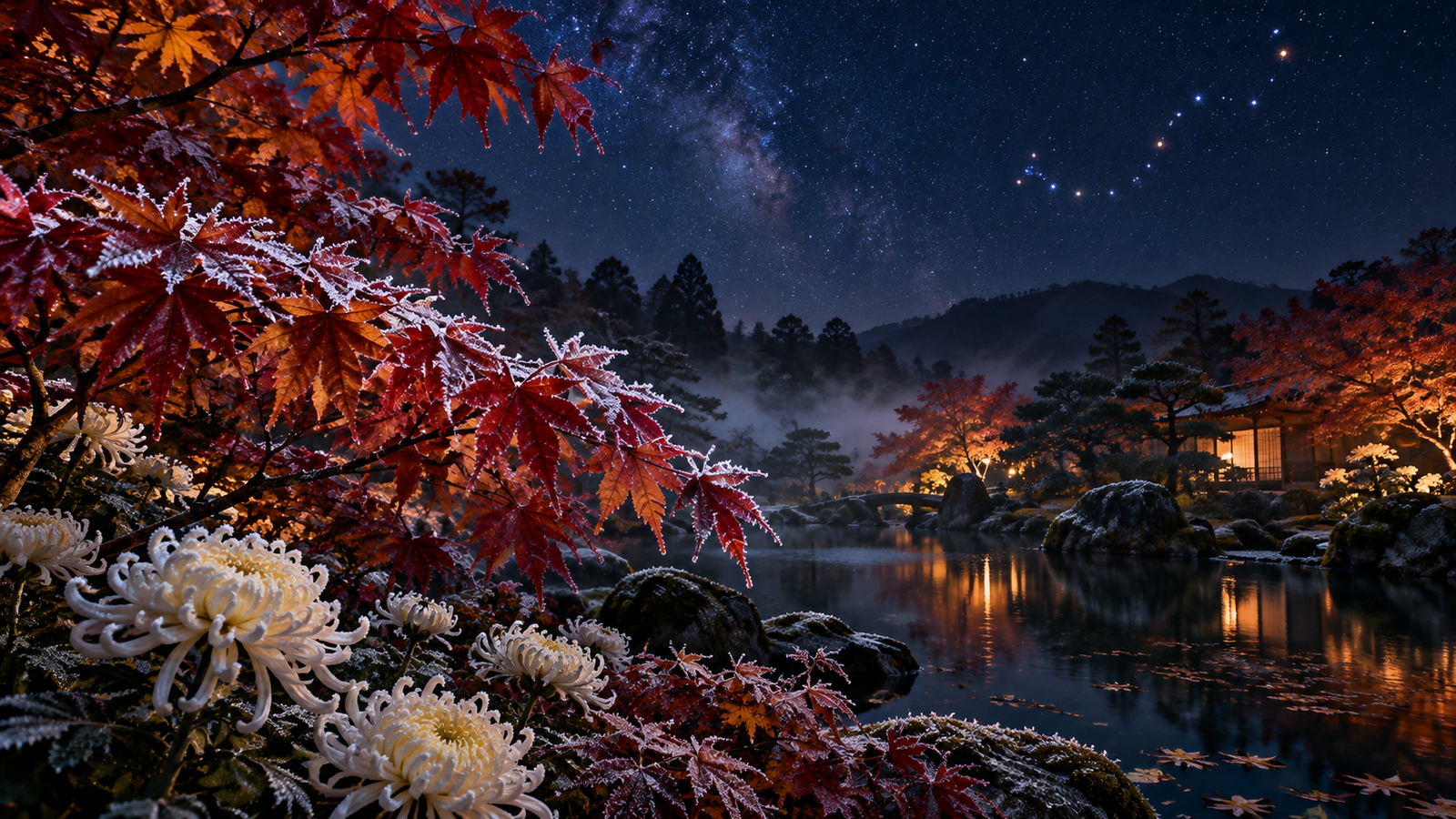
Sōkō is the 18th of Japan’s 24 solar terms and the last one of autumn. Its name is written with two characters: 霜 (shimo, frost) and 降 (kō, to descend or fall). It describes the time when nights grow cold enough for frost to settle on grass, roofs and fallen leaves.
In 2026, Sōkō begins at the exact moment the Sun enters 0° Scorpio in the tropical zodiac:
| Time zone | Start of Sōkō 2026 |
|---|---|
| Eastern Time (US) | October 23, 5:38 a.m. EDT |
| UTC | October 23, 9:38 a.m. |
| Japan | October 23, 6:38 p.m. JST |
Sōkō lasts about 15 days. It ends on November 7, when Rittō (立冬, Start of Winter) begins as the Sun reaches 15° Scorpio. In other words, Sōkō covers the first half of Scorpio season.
The Three Microseasons of Sōkō
Each solar term is split into three kō, or microseasons, of about five days. Together they form Japan’s 72 microseasons. Sōkō’s three read like a short autumn poem:
| Microseason | Meaning | Approx. dates |
|---|---|---|
| Shimo hajimete furu (霜始降) | Frost begins to fall | Oct 23–27 |
| Kosame tokidoki furu (霎時施) | Light rains fall now and then | Oct 28–Nov 1 |
| Momiji tsuta kibamu (楓蔦黄) | Maple leaves and ivy turn color | Nov 2–6 |
First comes the frost, then cold passing showers, then the full blaze of autumn leaves. It is a season of beauty that is already letting go — the leaves are brightest just before they fall.
Why Sōkō and Scorpio Belong Together
Scorpio is the sign of depth, transformation and what lies beneath the surface. It is a fixed water sign, ruled in modern astrology by Pluto and traditionally by Mars. Read symbolically, what nature does during Sōkō mirrors Scorpio’s themes closely.
- Frost is water changing form. Scorpio is a water sign associated with transformation. Frost is a vivid image of that: invisible moisture in the air, turned solid overnight.
- Beauty in letting go. The maples blaze red just before they fall. In astrology, Scorpio is linked with the idea that endings make room for renewal.
- Life moves underground. As the air cools, plants pull their energy into roots and seeds. Scorpio, too, is associated with turning inward, toward what is hidden and essential.
- A season of thresholds. Sōkō includes Halloween and ends at Rittō, the Start of Winter. This turn of the season is a fitting symbol for Scorpio’s themes of change and renewal.
Libra season was about balance and relationships. Sōkō asks a different question: what are you ready to release?
The Sky During Sōkō 2026
Astrologically, this year’s Sōkō is unusually eventful: two personal planets are retrograde at once, and a full moon arrives in the opposite sign. Times below are US Eastern.
| Date | Event | Astrological theme |
|---|---|---|
| Oct 3 – Nov 13 | Venus retrograde, from 8°30′ Scorpio back into Libra | Reviewing relationships, values and money before moving forward |
| Oct 23, 5:38 a.m. | Sun enters Scorpio — Sōkō begins | Turning inward; noticing what you’re ready to release |
| Oct 24, 3:12 a.m. | Mercury turns retrograde at 20°59′ Scorpio (until Nov 13) | Revisiting conversations, secrets and unfinished plans |
| Oct 25, 5:09 a.m. | Retrograde Venus re-enters Libra | Old relationship questions returning for a fairer answer |
| Oct 26, 12:12 a.m. | Full Moon at 2°45′ Taurus | Balancing Scorpio’s intensity with Taurus’s need for comfort and steadiness |
| Nov 7 | Rittō begins (Sun at 15° Scorpio) | Sōkō ends; winter begins in the Japanese calendar |
The big picture: with Mercury and Venus both retrograde through most of Sōkō, astrologers traditionally read this as a season for reflection rather than launches. That mood fits the solar term well. Symbolically, frost doesn’t build anything new — it clears the way. Both retrogrades end on November 13, and the Scorpio New Moon on November 9 (2:01 a.m. EST) offers a fresh-start moment soon after Sōkō closes.
Dates: Cafe Astrology, October 2026.
Seasonal Rituals for Sōkō
You don’t need to live in Japan to tune into this season. Here are five simple ways to honor Sōkō and Scorpio’s energy together.
- Write a “frost list.” On October 23, write down three habits, worries or commitments you’re ready to let go of. Keep it somewhere private — Scorpio values what’s unspoken. Revisit it at Rittō on November 7.
- Go leaf-watching. In Japan, momijigari (紅葉狩り), or “autumn-leaf hunting,” is a beloved custom. Take a slow walk somewhere with changing trees, and notice how beautiful endings can be.
- Eat warming autumn foods. Japanese tradition turns to persimmons, chestnuts, sweet potatoes and mushrooms at this time of year. Root vegetables match Scorpio’s pull toward what grows beneath the surface.
- Use the retrogrades well. With Mercury and Venus both retrograde, re-read old journals, reconnect with someone you’ve lost touch with, or finish a half-done project instead of starting a new one.
- Warm your home. As nights grow colder in late autumn, many Japanese households switch to heavier bedding and bring out their heaters. Make one small change that helps you rest more deeply this season.
FAQ
When does Frost Descends start in 2026?
Sōkō (Frost Descends) begins on October 23, 2026, at 5:38 a.m. EDT (6:38 p.m. in Japan). It ends on November 7, when Rittō, the Start of Winter, begins.
Is Sōkō always on the same day the Sun enters Scorpio?
Yes, in Western astrology’s tropical zodiac. Both are defined by the Sun reaching 210° of ecliptic longitude, measured from the spring equinox, so they always begin at the same moment. Depending on your time zone, the calendar date may differ by one day. (The sidereal zodiac used in Vedic astrology is measured differently, so its Scorpio dates do not line up.)
Does it actually frost during Sōkō?
In Japan’s mountains and northern regions, yes — the first frosts often appear around this time. In warmer cities like Tokyo, frost usually comes later. The name describes the general turn toward cold, not a specific forecast.
Is Mercury retrograde during Sōkō a bad sign?
Not at all. In astrology, Mercury retrograde (October 24 to November 13 this year) is traditionally read as a time that favors reviewing, editing and reconnecting over brand-new starts. That interpretation matches Sōkō’s quiet, reflective mood.
What comes after Sōkō?
Rittō (立冬, Start of Winter) begins around November 7 at 15° Scorpio. It is the first of Japan’s six winter solar terms.
Let the Frost Clear the Way
Sōkō is the last breath of autumn. The air turns sharp, the leaves burn red, and the Sun slips into Scorpio’s deep waters. Japan’s calendar and the Western zodiac agree: this is a time to release, not to rush.
This year, with Venus and Mercury both retrograde, that message is louder than usual. Let the frost settle. Let what’s finished fall away. By the time Rittō arrives on November 7, you’ll be ready for winter’s quiet renewal.
Follow the Sun through every season with AstroVibes Journal. Read your monthly horoscope, explore more Seasonal Astrology, and come back on November 7 for our guide to Rittō, the Start of Winter.